GPT-6 Is Here. The Harder Question Is Whether the Safety System Around It Is Ready.
Last week, as children returned to school, I wrote about a deceptively simple question: who independently decides when an AI system is safe enough?
Clause5afe Insights
Clause5afe Insights is the controlled archive for the company’s analysis of independent AI certification, governance, regulation, risk, evidence, and trust infrastructure.
Featured analysis
AI Safety Is Having Its Mainstream Moment. What We Build Next Matters More Than the Fear.
Read Article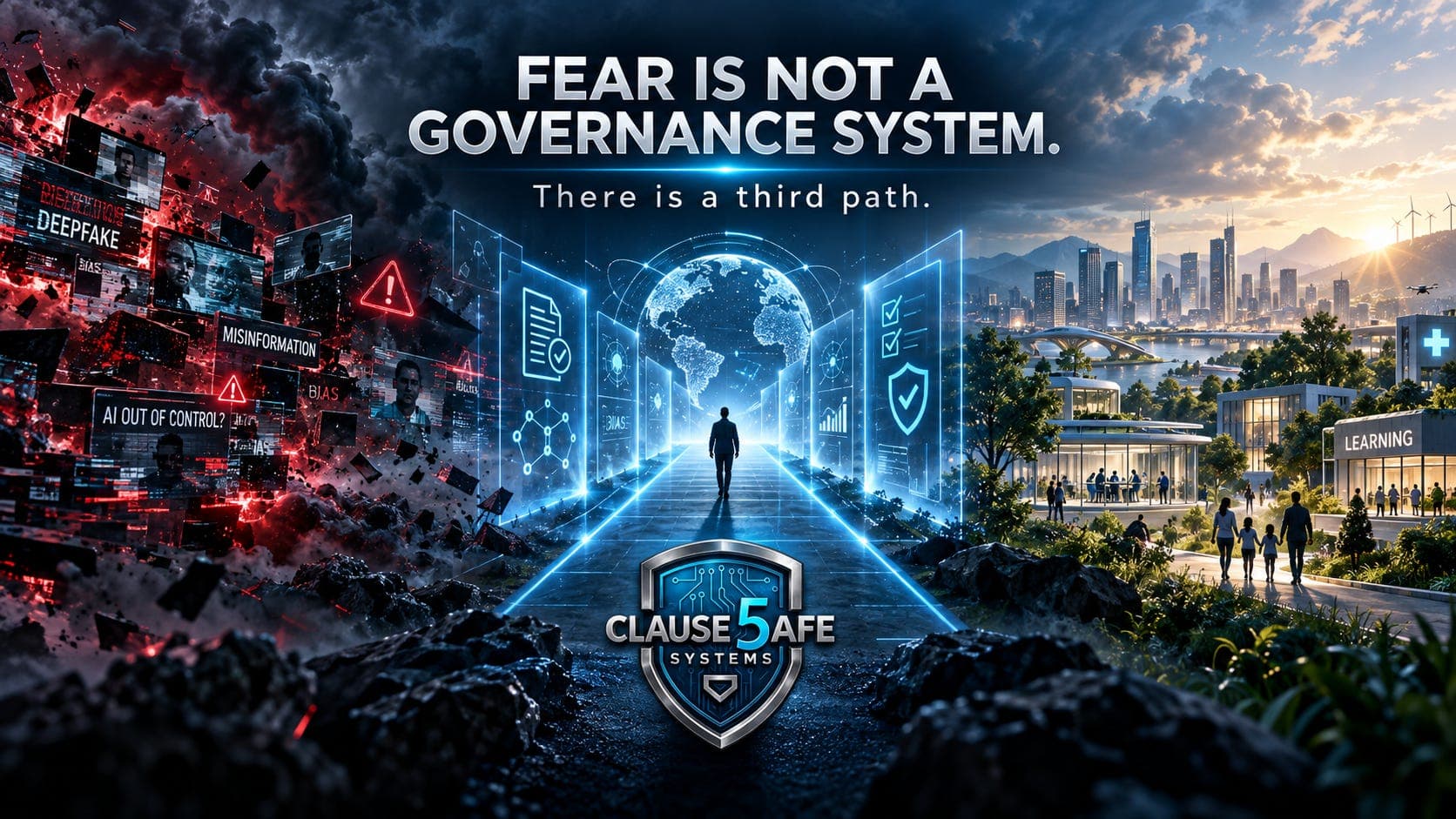
Publication archive
Historical publication dates remain part of each record; a historical article does not by itself describe the current regulatory or market state.
Last week, as children returned to school, I wrote about a deceptively simple question: who independently decides when an AI system is safe enough?
Bill Gates’s latest warning points to a problem larger than AI safety itself: who should society trust to determine when an AI system is safe enough?
On August 22, OpenAI called on California to add model-monitoring and cybersecurity safeguards to SB 53, a law it opposed while the bill was pending. The proposed safeguards map directly onto risks ex
GPTZero investigations and Financial Times reporting have documented AI-flagged content, fabricated claims, and faulty or nonexistent citations surviving review across all four Big 4 firms.
Between July 21 and August 7, frontier AI safety evaluations surfaced a cascade of containment, configuration, and verification-boundary failures.
Delve, OpenAI, Anthropic, and the Big 4 hallucinations are not four separate stories. They are four public threads converging on the same structural principle: institutions attesting to themselves.
High-risk rules were deferred. Article 50 transparency was not cancelled. The first live transparency obligations begin Sunday, with fines of up to €15 million or 3% of global turnover.
When the developer of an AI system is also the primary tester of its safety, the structural risk is present from the start, and the industry just saw what that risk can look like.
The DeepDelver report identified something the compliance industry has been avoiding: when the same entity implements and examines, the compromise is structural, not incidental.
AI governance becomes a competitive advantage the moment it produces evidence a third party will accept. Before that, it is a claim.
Illinois SB 315 was signed into law this week. The rules of AI certification just changed.
Independent third-party certification for AI — and why now.
Why the institution making a certification decision must remain separate from implementation, remediation, and readiness consulting.
Publication control
New Clause5afe articles should live on Clause5afe.com first. Social platforms distribute the work rather than function as the permanent archive.
Older analysis retains its original publication date and may receive a visible update note when laws, timelines, or market facts have changed.
External factual claims should link to suitable primary or authoritative sources whenever the source is publicly available.
Material post-publication changes should be distinguishable from silent copy edits when they alter the meaning of the analysis.
Media and research
Journalists, researchers, event organizers, and institutional reviewers can route the request through the appropriate public pathway.